Frame
Translate complexity into a set of questions that matter.

 Start a conversation
Client work · Salmat

Strategic reset · leadership alignment
Fundamental Business worked shoulder-to-shoulder with Salmat’s leadership to make the organisation more visible to itself—then turn that shared view into clearer roles, priorities and executive action.
See the work ↓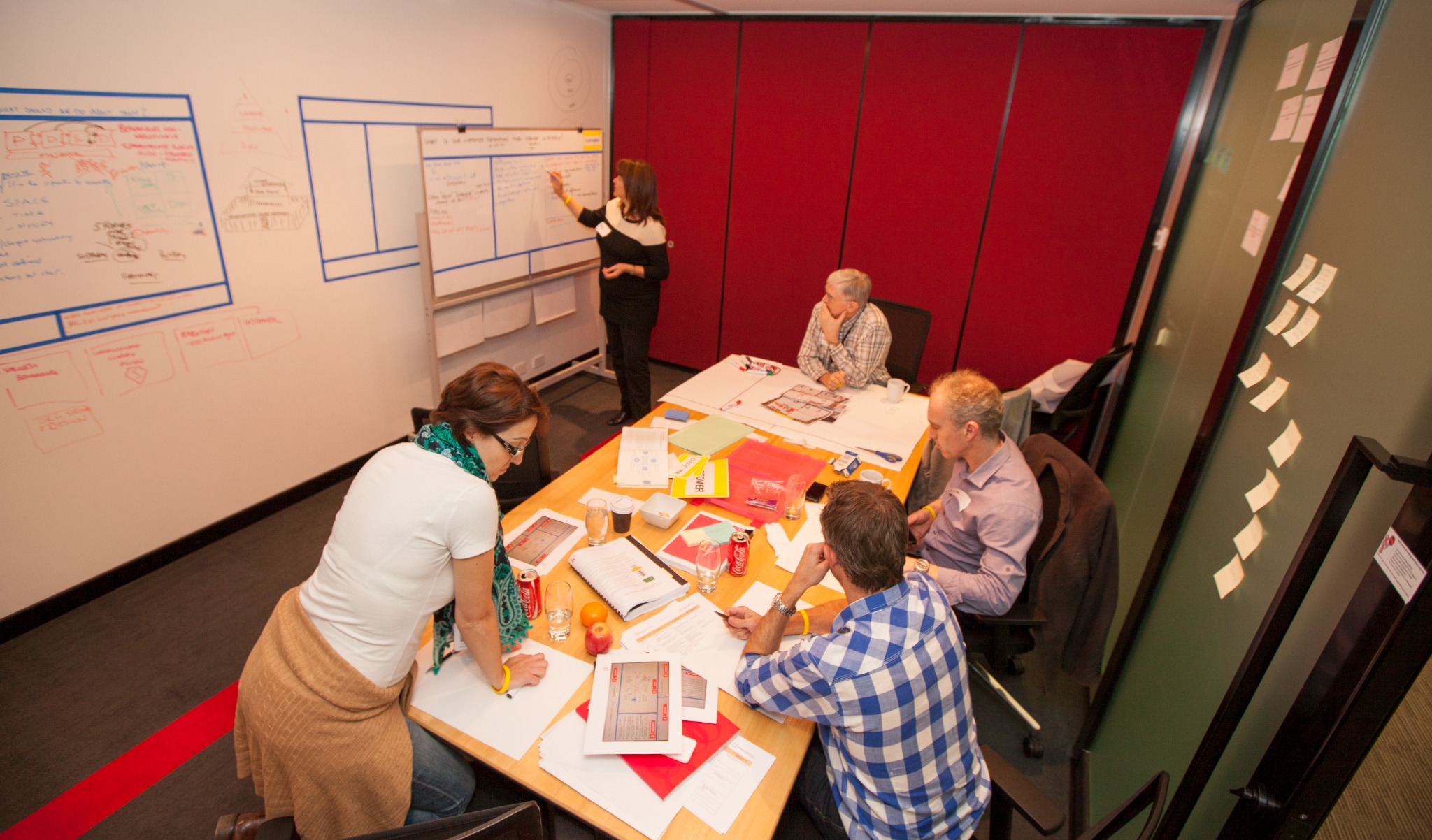
The situation
In 2014, Salmat was part-way through a significant transformation. Revenue and margins had been under pressure. Execution, platform stability, capability gaps, customer performance and organisational complexity all demanded attention.
Meaningful growth opportunities remained. The immediate need was to help leaders see the whole situation, test the assumptions beneath the existing plan and make practical choices together.
Working on the business
CEO Craig Dower’s concern was direct: the leadership team was spending too much time working in the business and needed a stronger rhythm for working on it.
The engagement created that rhythm. It was not an external team disappearing to write the answer. Salmat’s own leaders supplied the knowledge, built the thinking and remained responsible for the strategy. Fundamental Business framed the work, structured participation, challenged assumptions and helped the group synthesise what it was seeing.
A shared view of the business
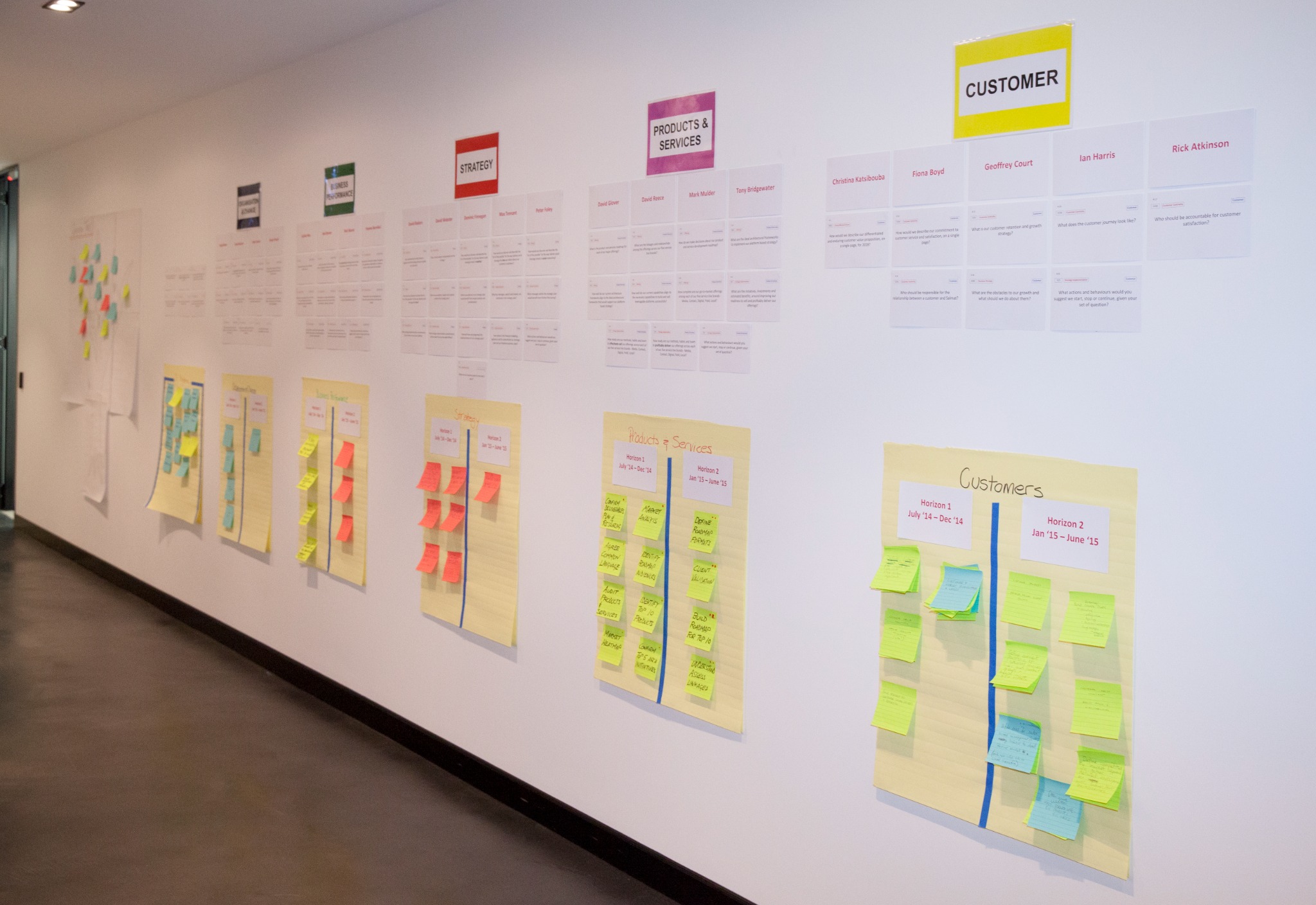
The working architecture brought separate concerns into one visible field. Leaders could see how a customer question connected to product, performance, people or organisational change—and where an apparently local decision would create consequences elsewhere.
This was the beginning of making the organisation visible to itself.
Fundamental Storyboarding®
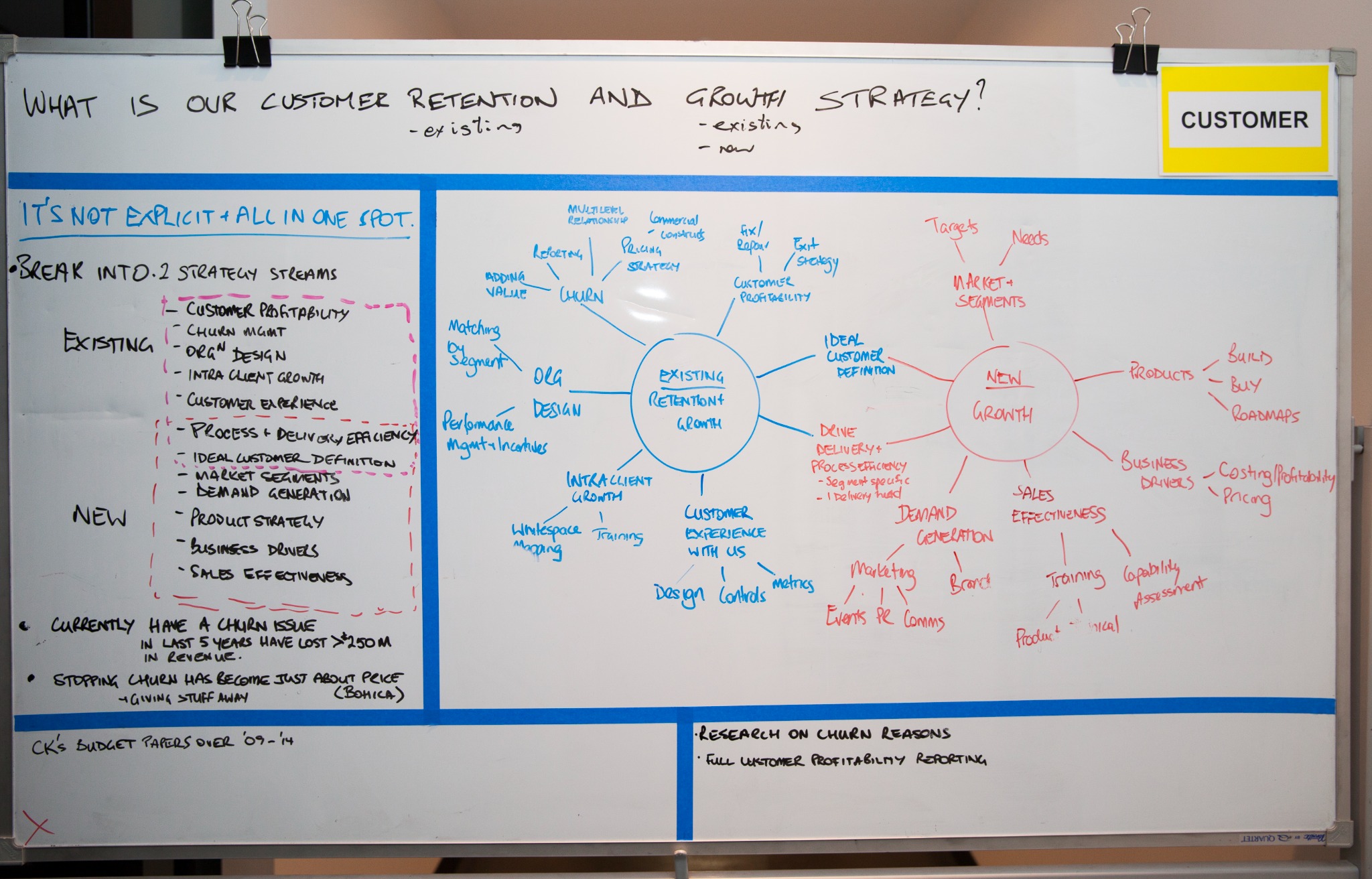
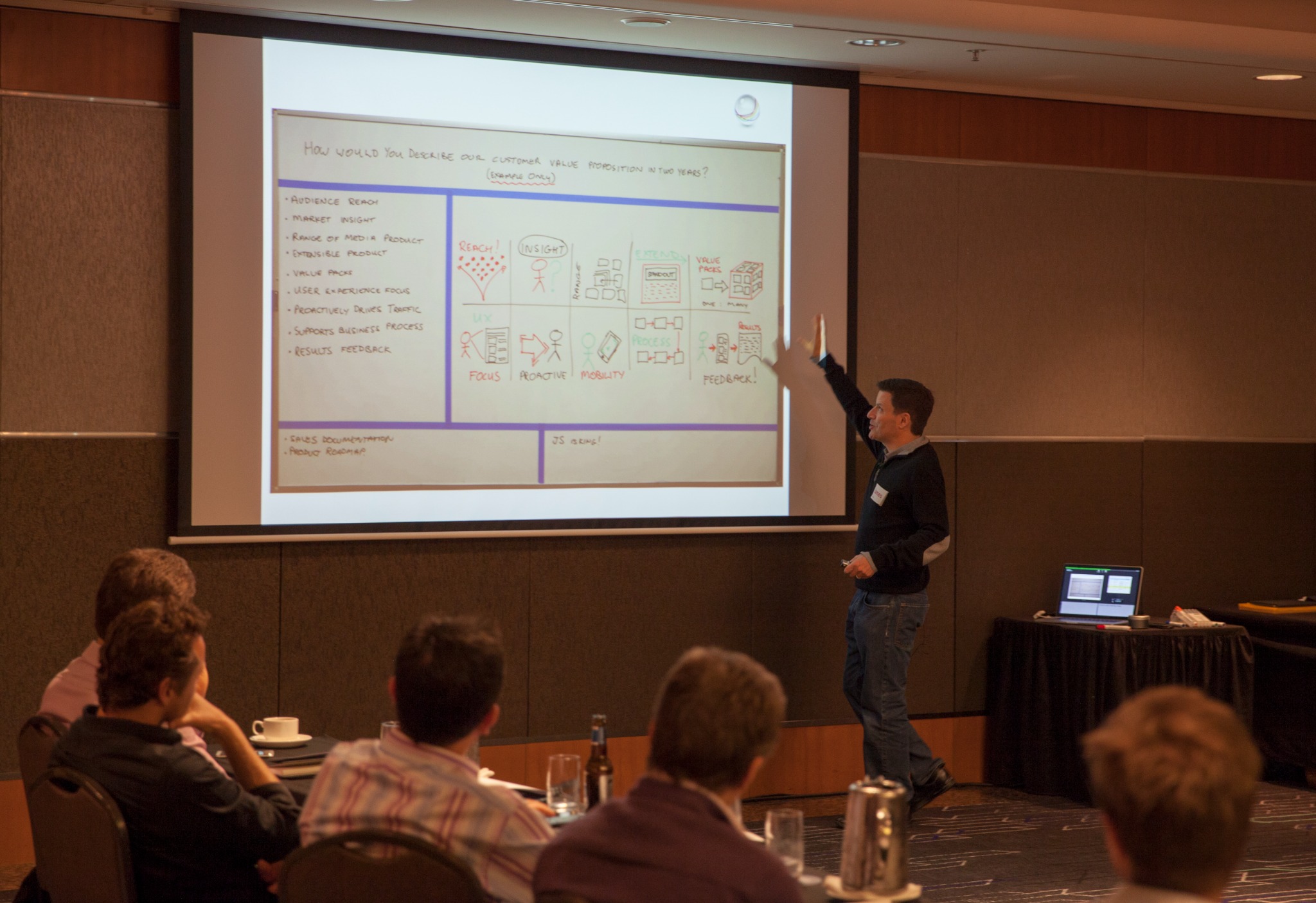
Each question became a disciplined working surface. Teams drew and wrote their first answers, referenced available data, marked areas needing further research, presented their logic and refined it through peer discussion.
What is our customer retention and growth strategy?
How should products and services evolve?
What major operational challenges require action?
Which strategic assumptions must be tested?
The organisation thinking together
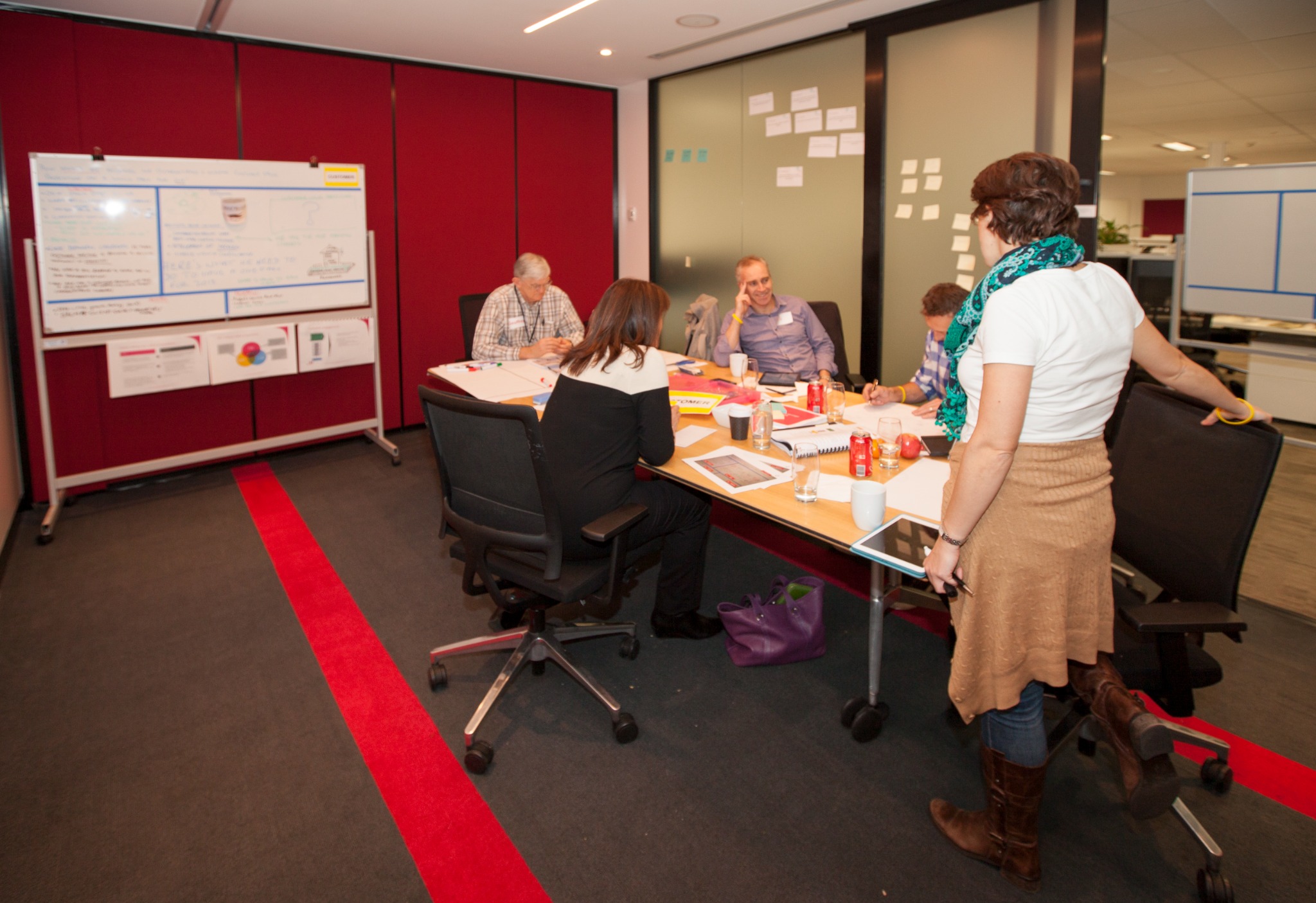
Twenty-three leaders took part in the core weekend. Five working teams of roughly six people developed the thinking, with broader leadership involvement reaching approximately 40 people at peak moments across the process.
Work moved repeatedly between small-team construction and whole-group examination. That rhythm improved the answers while building shared ownership of them.
Translate complexity into a set of questions that matter.
Build rough-draft answers in small, cross-functional teams.
Present the thinking, challenge assumptions and identify gaps.
Join the answers into a more coherent view of the organisation.
Leadership capability made visible
Because leaders were doing the work in the open, the process made capability observable. Craig could step back and see people analyse, present, listen, challenge, connect ideas and take ownership across organisational boundaries.
People in the wider operating leadership group demonstrated capability that made them credible for larger executive responsibilities. The value was not a confidential ranking of individuals. It was a clearer view of the leadership strength already inside the organisation.
It was a huge success and a giant leap forward.
Craig Dower
Chief Executive Officer, Salmat · role held at the timeFrom strategy to execution
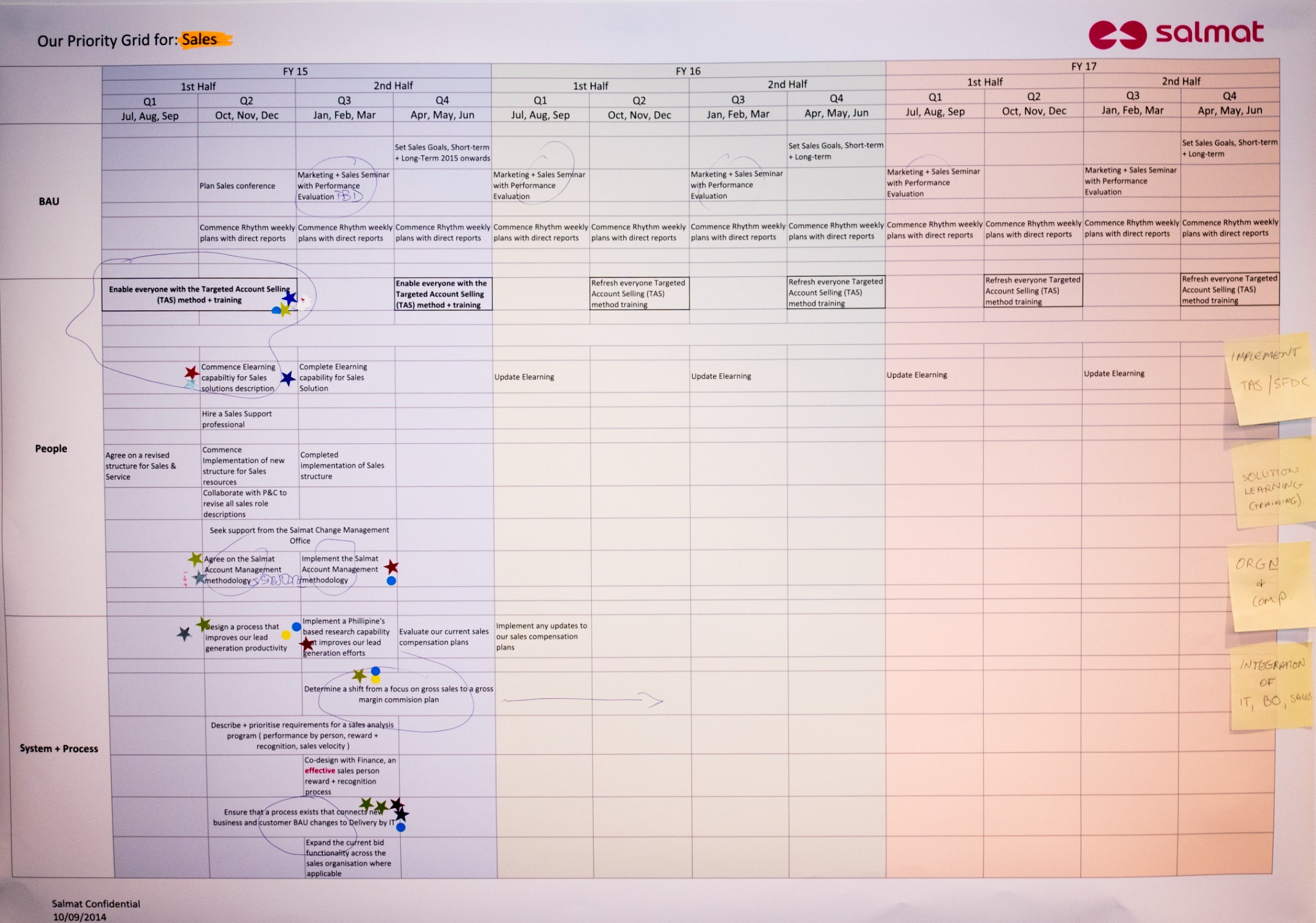
Fundamental Grid® was used during that year as an executive planning and alignment tool. It made initiatives, timing, resource pressure, dependencies, implementation conflicts and management attention visible across a three-year view.
The method was not subsequently embedded as an annual enterprise-wide discipline or cascaded through every management layer. Its contribution was specific: during this phase, it helped the Executive Committee translate strategic intent into a more coordinated picture of execution.
The executive reset
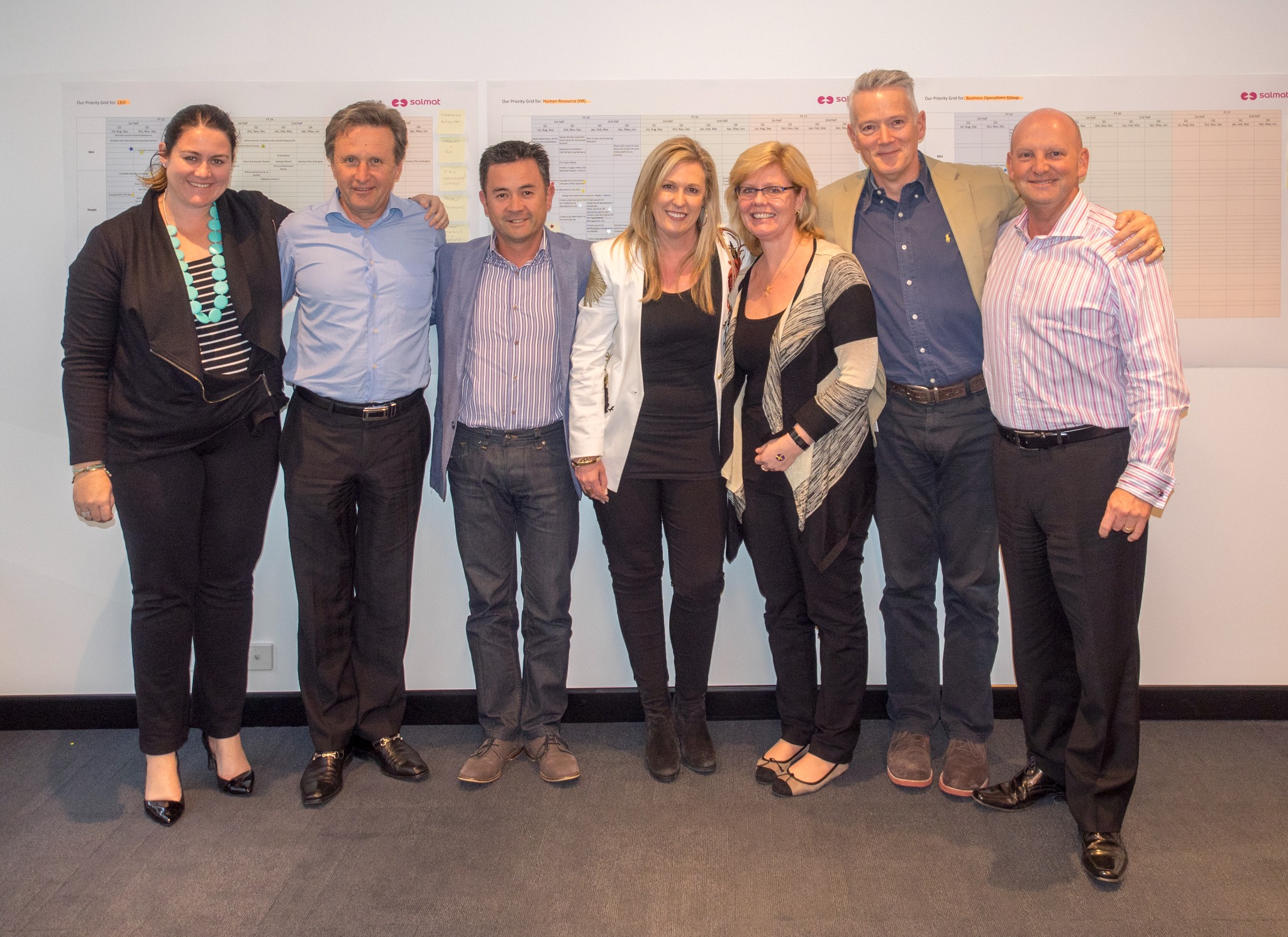
The phrase “executive reset” described practical organisational change—not a single meeting. The work contributed to a simpler structure and a clearer way for leaders to operate together.
Roles and lines of business were consolidated, with duplication and some organisational silos reduced.
Leadership responsibilities and measures became clearer, strengthening ownership and reporting.
An integrated sales approach and stronger product-management and marketing capability supported work across boundaries.
Strategic issues could be addressed more deliberately and more frequently—not left to an annual planning event.
Board engagement
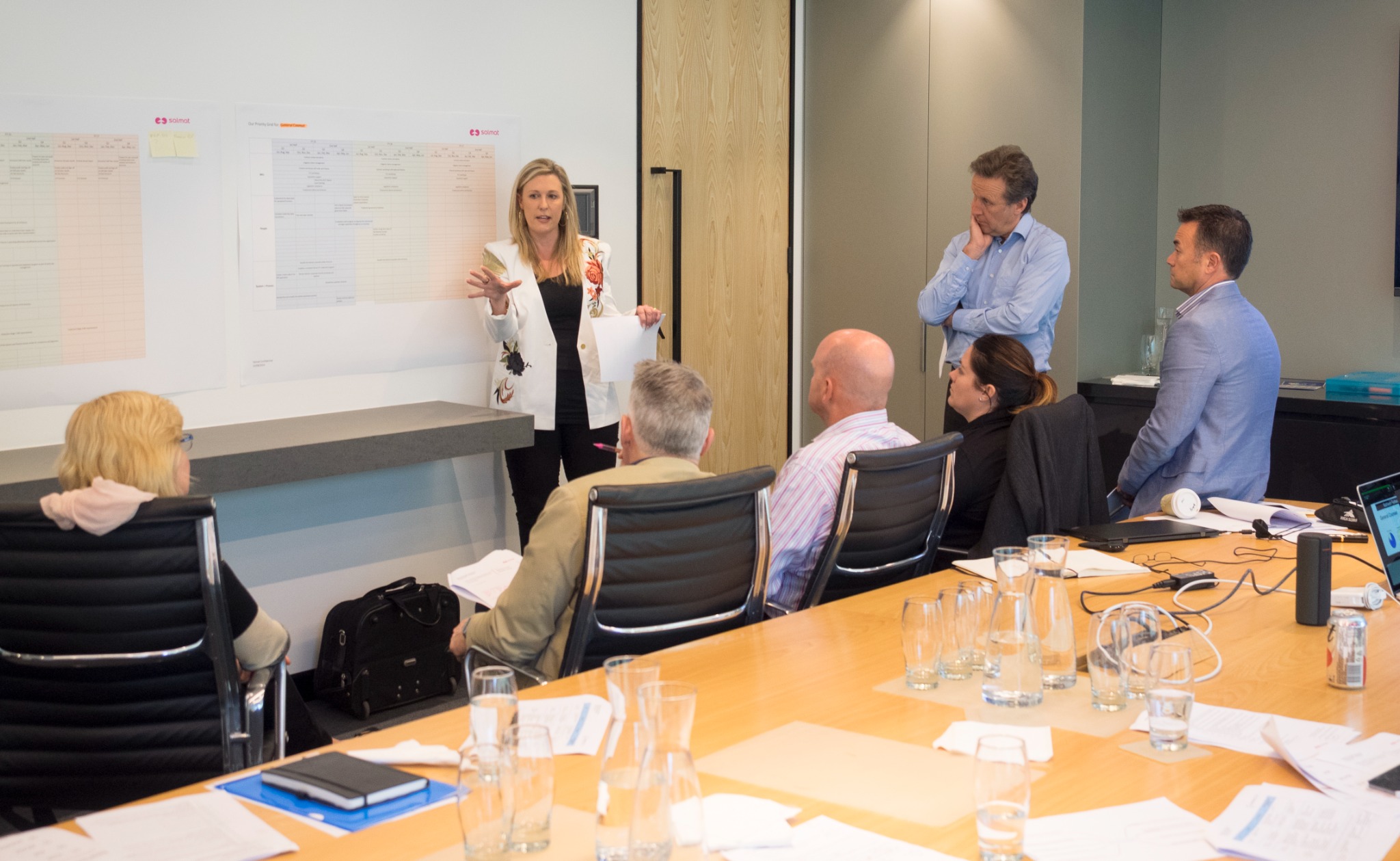
At the October review, Board members walked the wall, engaged directly with the questions and emerging thinking, contributed to prioritisation and took part in full and frank discussion.
The distinction mattered. Leadership developed and implemented the strategy. The Board reviewed, challenged, refined and approved it. The visible working architecture gave both groups a stronger basis for that conversation.
Continued support
Salmat sought further Fundamental Business support in Commercial Finance and Technology Leadership. The Commercial Finance team, for example, worked through how to set up the function for long-term success and which technology, process and people priorities should guide its near- and longer-term agenda.
These were contained follow-on assignments, not a second enterprise case study. They show that the relationship continued because the working method remained useful.
Client voice
“The facilitation, preparation and execution of the workshop over the weekend was world class.”
Tony Bridgewater
Chief Technology Officer, Salmat · role held at the timeA closing reflection
The most durable contribution was not a document or a wall of completed boards. It was a stronger shared view of the business—and a more disciplined way for leaders to discuss what they could now see.
Discuss a situation Return to Client Work →