Frame the question
Clarify the decision, situation or opportunity requiring attention and define what a useful session must produce.

 Start a conversation
02 | Leadership working sessions
Some questions deserve more than another meeting. Fundamental Business designs and facilitates focused working sessions that help leaders make the situation visible, compare perspectives, construct a shared view and determine what should happen next.
The session is built around the question—not a standard workshop agenda.
Why a working session
Leadership teams rarely arrive without opinions, experience or evidence. The difficulty is seeing the pieces together, surfacing the differences that matter and creating enough clarity to make a useful choice.
Each session begins with one defining question. Connected subquestions may emerge, but the design keeps attention on the outcome the group needs to produce.
The objective is not merely a good discussion. It is a clearer basis for action.
LEADERSHIP AT WORK
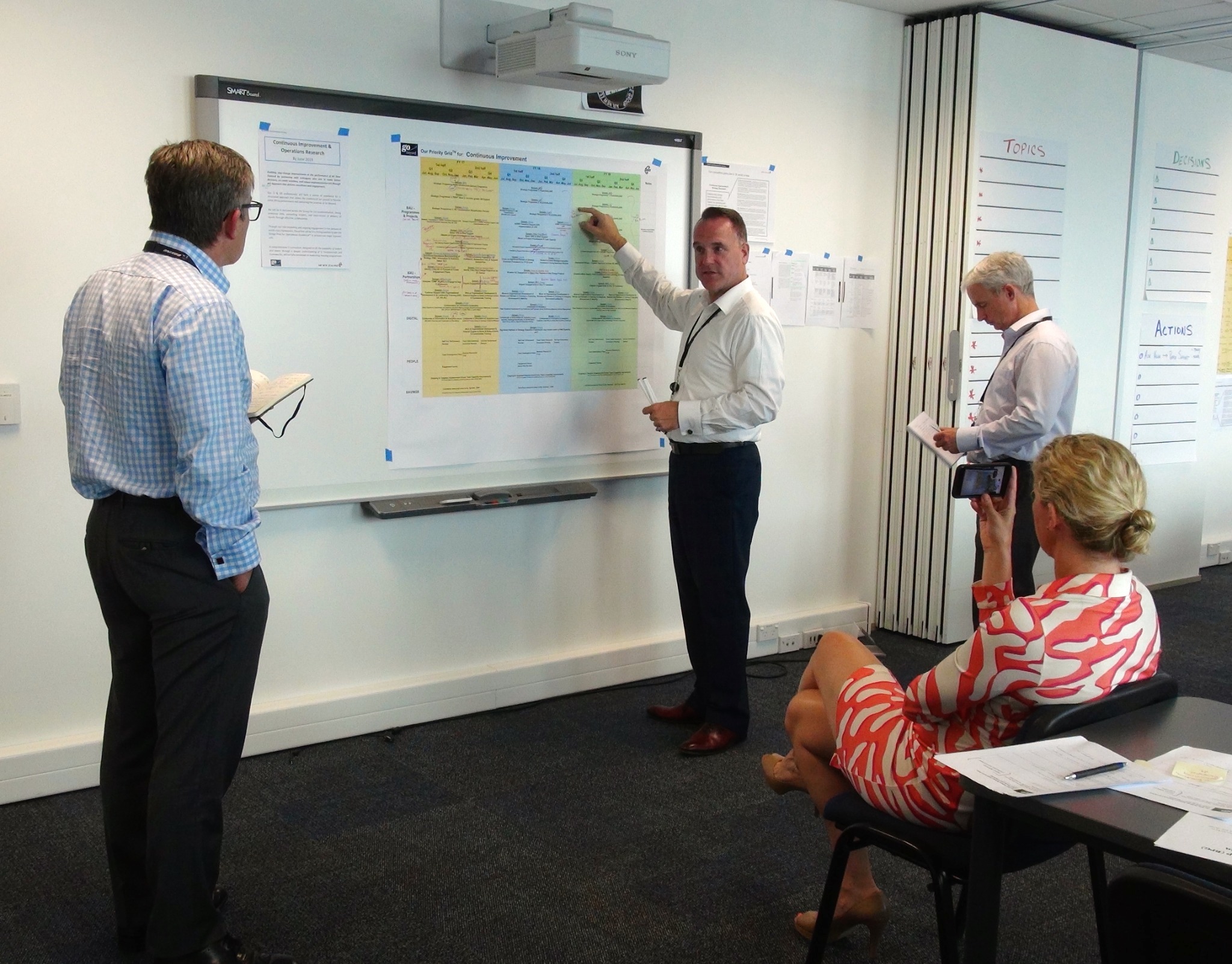
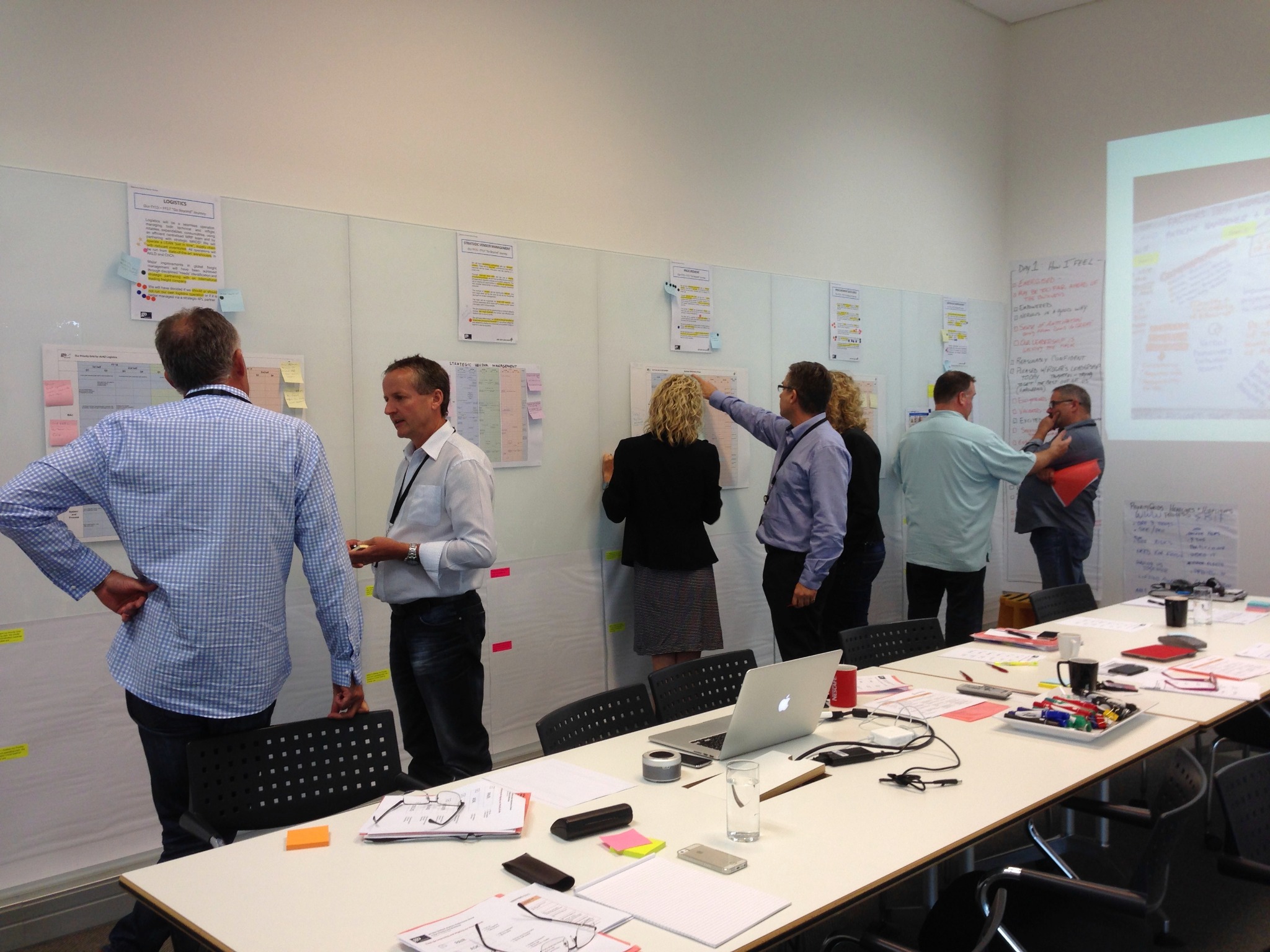
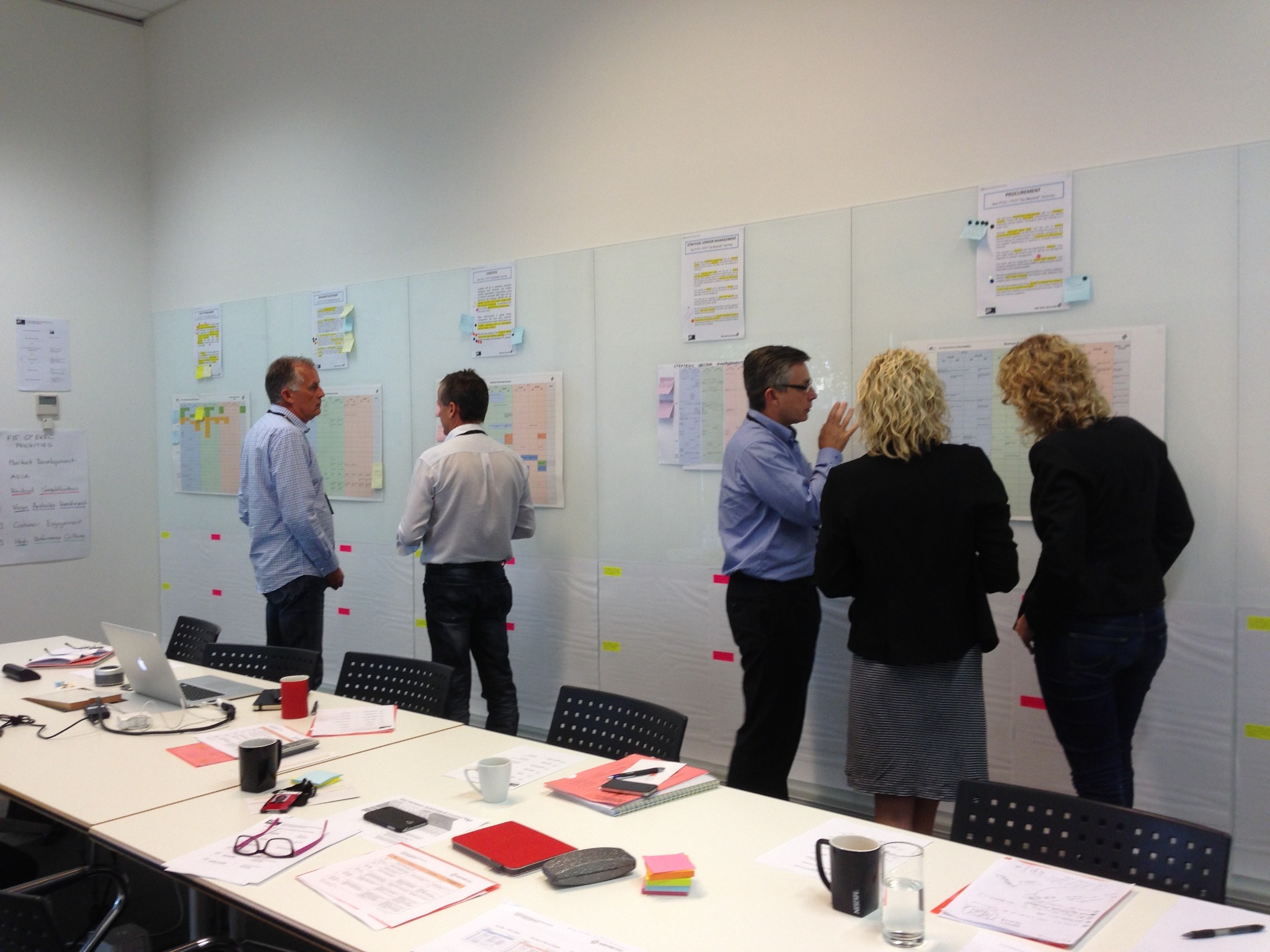
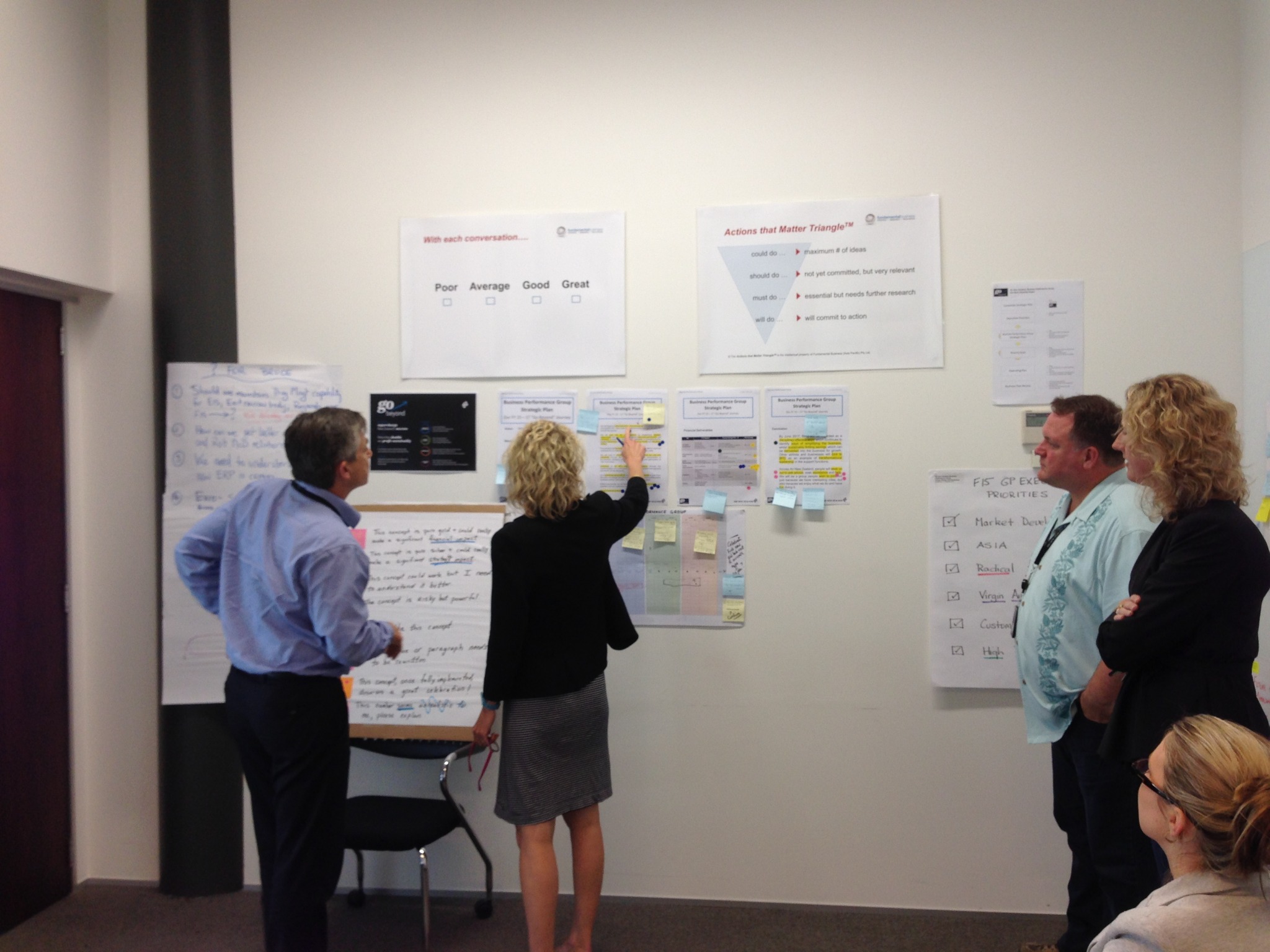
Leadership teams work directly with the questions, evidence and choices in front of them. Complex issues become visible, conversations become more precise, and priorities can be tested together before decisions are made.
Session architecture
Clarify the decision, situation or opportunity requiring attention and define what a useful session must produce.
Bring together the smallest useful group capable of understanding the question, contributing relevant knowledge and carrying the outcome forward.
Identify the observations, data, customer insight, working material and prior decisions participants need in order to think well.
Use an appropriate shared surface so that assumptions, evidence, relationships, differences and possibilities can be examined together.
Help participants compare perspectives, test interpretations and form a view they understand and can use.
Clarify conclusions, decisions, decision criteria, responsibilities and what should happen after the session.
Questions worth convening around
A strong working session has a clear centre of gravity. The question should be important enough to justify the participation and bounded enough for the group to make genuine progress.
What makes it a working session
The question, intended outcome and decision boundary are established before the session begins.
The people in the room are selected because of the perspective, authority, knowledge or ownership the question requires.
Thinking is placed on a shared working surface where participants can examine, challenge and improve it together.
The conversation is structured without becoming mechanical, allowing important differences to surface while keeping the group moving towards an outcome.
The session concludes with clear conclusions, choices, responsibilities, next moves or decision criteria—not simply a record of discussion.
Possible formats
A working session should not be forced into a standard duration. The right format depends on the importance and boundaries of the question, the evidence involved, the number of participants and the outcome required.
Illuminate a question, test an idea or determine whether deeper work is required.
Address a bounded question through substantive participation and visible analysis.
Construct a substantial shared view, test choices and agree coordinated next moves.
Progress through several stages, such as discovery, construction, decision and activation.
Methods and working surfaces
Each working session draws selectively from the Fundamental Business library of methods, questions, visual artefacts and facilitation designs.
Depending on the question, the working surface may draw from Fundamental Pyramid®, Fundamental Grid®, Fundamental Storyboarding®, Greenhouse Framework®, or purpose-designed canvases, cards, maps or decision surfaces.
Illustrative example
How should we integrate the acquired business without losing customer value?
Participants identify what customers value today, where the two businesses operate differently, which capabilities and relationships must be protected, where dependencies or risks exist, and which leadership decisions cannot be deferred.
The CEO, relevant functional leaders, customer and operational owners, and the people accountable for carrying the integration forward.
The group constructs a shared integration picture, tests where value could be lost, compares priorities and constraints, and agrees the principles and decisions that should guide the next phase of work.
A shared integration picture, agreed priorities and decision principles, clearly owned next moves, and a practical basis for sequencing the integration.
A useful beginning
It may concern direction, priorities, alignment, growth, integration, operating design, customers, innovation, AI or an important decision the leadership team needs to make together.
The first conversation will help determine whether the question is sufficiently important, appropriately bounded and suited to a Fundamental leadership working session.
Discuss a working session